


Building a strong and lean body requires consistency, discipline, and accurate nutritional knowledge. Unfortunately, many people fall for nutrition myths that hurt gym results and significantly slow their progress. These misconceptions often appear convincing, yet they quietly sabotage muscle growth and fat loss. Therefore, understanding the truth behind common dietary confusion can completely transform your training outcomes.
At Vibe Gym & Health Club, we frequently meet motivated individuals who train hard yet struggle due to misguided nutrition strategies. You can explore our approach to balanced fitness at https://dha.vibegym.pk/vibe-with-us/ and discover performance-focused facilities at https://dha.vibegym.pk/features/. However, before stepping into advanced programs, you must first eliminate the false beliefs limiting your results.
Why Fitness Nutrition Myths Are So Common
Fitness information spreads quickly through social media, influencers, and outdated advice. As a result, fitness nutrition myths continue circulating without scientific backing. Many beginners accept these claims because they sound simple and promising. However, real body transformation demands evidence-based nutritional decisions.
Moreover, marketing often promotes quick solutions that ignore fundamental physiological principles. Supplements receive more attention than balanced meals, while calorie science gets oversimplified. Consequently, gym members unknowingly repeat the same dietary mistakes for months or even years.
The Most Common Nutrition Myths That Hurt Gym Results
Let us examine the most damaging misconceptions in detail. Understanding these will protect your progress and improve overall performance.
1. More Protein Always Means More Muscle
Protein intake for muscle growth is essential, yet excess protein does not guarantee faster gains. The body can only utilize a certain amount efficiently for muscle repair and synthesis. Consuming extremely high protein without balanced carbohydrates and fats can disrupt energy levels.
In reality, muscle building requires proper training stimulus, adequate calories, and rest. Therefore, focusing only on protein while ignoring total macronutrient balance is one of the biggest muscle-building nutrition myths.
The supplements versus whole foods debate often confuses beginners. Whole foods provide fiber, micronutrients, and digestive benefits that powders alone cannot replace, so relying only on shakes can lead to nutrient gaps and poor satiety. However, in conditions such as malabsorption disorders, chronic kidney disease, post-bariatric surgery, pregnancy, or strict vegan diets, supplementation may be essential. The key is understanding when supplements are complementary and when they are medically necessary.
Optimal Protein Guidelines for Muscle Growth
| Goal | Recommended Daily Protein Intake |
| General fitness | 1.2 – 1.6 g per kg of body weight |
| Muscle gain | 1.6 – 2.2 g per kg of body weight |
| Fat loss phase | 1.8 – 2.4 g per kg of body weight |
Balancing protein with carbohydrates ensures sufficient energy for intense workouts.
2. Carbs Make You Gain Fat
Carbohydrates often receive unfair blame for fat gain. However, body fat increases primarily from excessive calorie intake rather than carbohydrates alone. This myth causes many individuals to avoid carb timing for workouts, which reduces training intensity.
Carbs fuel performance, improve strength output, and enhance recovery. Eliminating them leads to fatigue and decreased gym productivity. Therefore, smart carbohydrate planning supports both muscle gain and fat loss.
Ideal carb timing strategy:
- Consume moderate carbohydrates before training for energy
- Include carbs after workouts to replenish glycogen stores
- Adjust intake based on training intensity and goals
Understanding carb timing prevents common fat loss nutrition mistakes and supports metabolic balance.
3. Eating Less Is Always Better For Fat Loss
One of the most damaging calorie-deficit myths suggests that extreme restriction accelerates fat loss. Initially, weight may drop quickly, yet severe deficits reduce metabolism and muscle mass. Consequently, long-term progress becomes difficult.
Metabolism and fat loss myths often ignore adaptive responses of the body. When calories drop too low, hormonal changes increase hunger and reduce energy expenditure. Sustainable fat loss requires moderate calorie control with sufficient protein and resistance training.
Healthy fat loss principles include:
- Maintain a small calorie deficit
- Prioritize resistance training
- Preserve muscle mass through adequate protein
- Monitor progress consistently
4. Supplements Replace Real Food
The supplements versus whole foods debate often confuses beginners. Whole foods provide fiber, micronutrients, and digestive benefits that powders alone cannot replace, so relying only on shakes can lead to gaps and poor satiety. For most healthy individuals, supplements should support, not dominate, a balanced diet. However, in conditions like malabsorption disorders, chronic kidney disease, post-bariatric surgery, pregnancy, or strict vegan diets, supplementation may be essential. The key is knowing when supplements are complementary and when they are medically necessary.
Whey Protein Damages Kidneys and Liver
A common myth claims whey protein is synthetic and harmful to the kidneys or liver. In reality, whey is a natural milk-derived protein produced during cheese making, not a chemical compound. It is considered the gold standard because of its high biological value, complete essential amino acid profile, and superior bioavailability, meaning it is efficiently absorbed and utilized by the body. Whey provides a high protein dose with relatively low calories, making it convenient for meeting daily requirements. For healthy individuals, research consistently shows it is safe when consumed within recommended protein ranges.
5. Clean Eating Guarantees Results
Clean eating misconceptions often promote the idea that eating only unprocessed foods automatically builds muscle and burns fat. While food quality matters, total calorie balance still determines body composition.
For example, consuming large portions of healthy foods can still exceed calorie requirements. Similarly, occasional flexible choices within a controlled plan will not ruin progress. Balance remains more effective than perfection.
Pre-Workout and Post-Workout Nutrition Timing

Pre-workout meal timing significantly affects workout intensity and endurance. Consuming a balanced meal containing carbohydrates and protein two hours before training improves performance. Conversely, training completely fasted may reduce strength for some individuals.
Post-workout nutrition timing also plays a role in muscle recovery. Eating protein and carbohydrates within two hours supports glycogen replenishment and muscle repair. However, the anabolic window is wider than previously believed. Therefore, consistency across the entire day matters more than immediate timing.
Hydration and Workout Performance
Hydration and workout performance share a direct connection. Even mild dehydration decreases strength, endurance, and concentration. Many individuals focus only on macros while ignoring fluid intake.
Maintaining consistent hydration improves nutrient transport and temperature regulation. As a result, training sessions become more productive, and recovery improves significantly.
Daily hydration guidelines:
- Drink water consistently throughout the day
- Increase intake during intense sessions
- Monitor urine color as a hydration indicator
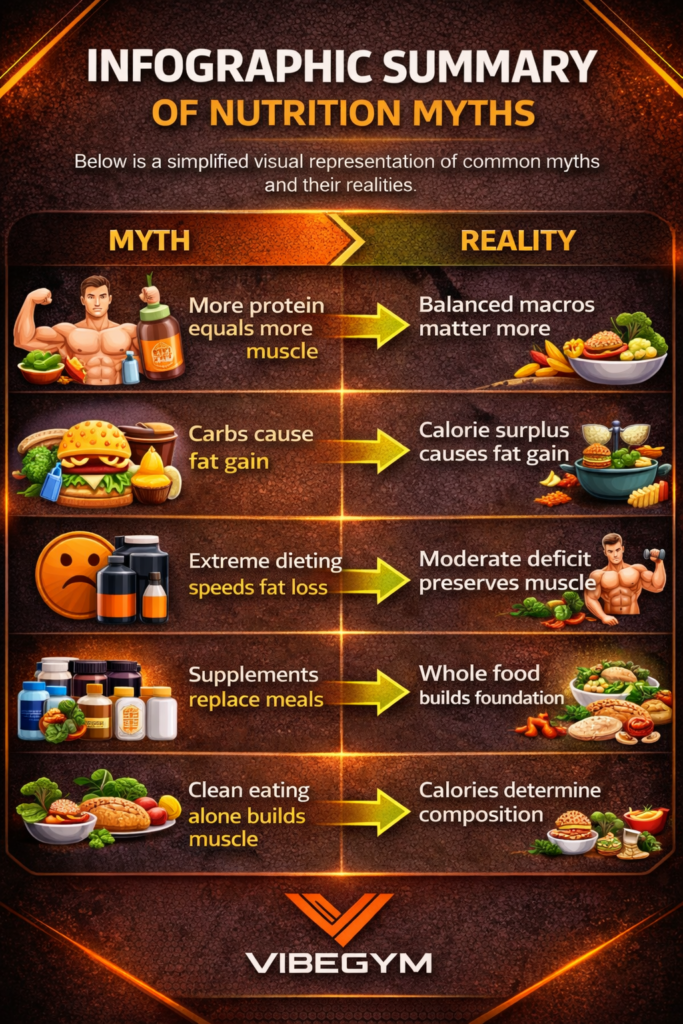
Comparing Myth-Based Dieting Versus Evidence-Based Nutrition
| Myth-Based Approach | Evidence-Based Approach |
| Extreme calorie cuts | Moderate calorie deficit |
| Eliminating carbs completely | Structured carb timing |
| Excessive protein intake | Balanced macronutrient plan |
| Overreliance on supplements | Whole Food Foundation |
| Ignoring hydration | Strategic hydration planning |
Adopting an evidence-based strategy creates measurable and sustainable gym improvements.
How These Diet Myths For Muscle Gain Impact Progress
When individuals believe common diet myths for muscle gain, they unknowingly limit strength development. Low carbohydrate intake reduces lifting capacity. Severe calorie deficits decrease recovery speed. Inadequate hydration affects endurance.
Furthermore, these mistakes create frustration and mental burnout. Many gym members assume their genetics are responsible for slow progress. In reality, correcting simple nutrition errors often produces noticeable changes within weeks.
At Vibe Gym & Health Club, our trainers guide members beyond misinformation and toward structured, personalized nutrition support. Learn more about our fitness philosophy at https://dha.vibegym.pk/vibe-with-us/# and begin your transformation journey.
Practical Steps To Avoid Gym Diet Mistakes
To overcome nutrition myths that hurt gym results, follow these practical strategies:
- Track total calorie intake instead of guessing
- Distribute protein evenly throughout the day
- Time carbohydrates around training sessions
- Choose supplements carefully and strategically
- Stay consistently hydrated
- Review progress every four weeks
Consistency combined with knowledge produces measurable outcomes.
The Psychological Impact Of Nutrition Myths

Believing false dietary rules often creates guilt around food choices. Individuals fear carbohydrates or social meals unnecessarily. Consequently, rigid behavior replaces flexible discipline.
Balanced nutrition supports both physical and mental performance. When you understand science-based strategies, confidence increases, and stress decreases. Therefore, eliminating misinformation improves overall lifestyle quality.
Final Thoughts
Progress in the gym depends on training intensity, recovery, and intelligent nutrition planning. However, nutrition myths that hurt gym results continue to mislead motivated individuals worldwide. By recognizing common fitness nutrition myths, you can protect your effort and accelerate results.
Muscle growth demands adequate protein intake for muscle growth, proper carb timing for workouts, and strategic post-workout nutrition timing. Similarly, sustainable fat loss requires avoiding calorie deficit myths and understanding metabolism and fat loss myths.
Instead of following trends, choose structured guidance and evidence-based principles. Small adjustments today can unlock significant progress tomorrow.
Ready To Break Free From Nutrition Confusion
Stop letting outdated myths limit your transformation. Join a community that values science-based training and intelligent nutrition strategies. Visit https://dha.vibegym.pk/vibe-with-us/ and explore premium fitness facilities at https://dha.vibegym.pk/features/.
Your progress deserves clarity, structure, and expert guidance. Take the first step today and experience training backed by knowledge, energy, and real results.
Frequently Asked Questions
1. How much protein do I really need for muscle growth
Most individuals require between 1.6 and 2.2 grams per kilogram daily for effective muscle development.
2. Should I avoid carbohydrates when trying to lose fat
No, carbohydrates support workout performance and recovery when calorie intake remains controlled.
3. Are supplements necessary for gym progress
Supplements are optional and should complement balanced meals rather than replace real food.
4. Does eating late at night cause fat gain
Fat gain depends on total daily calorie intake rather than meal timing alone.
5. How important is hydration during workouts
Hydration directly affects strength, endurance, and recovery, making it essential for performance.